
Home   »  Blog

Blog

Posts Tagged ‘global warming’

Framing the Climate Justice Story

Tuesday, November 23rd, 2010

As movements around the planet mobilize to counter the effects of climate destabilization on their communities, cultures, and ecosystems, a framing battle of global significance is underway.

In the climate fight, as with so many other struggles, the heart of the framing battle is naming the problem, since how we define the problem determines what solutions are possible. To varying degrees, governments and multinational corporations around the world have acknowledged the crisis and they claim they are working to address it. However, they present the climate crisis through a reductionist lens as merely a problem of too much carbon in the atmosphere while ignoring the underlying issues of justice, equity, and humanity’s relationship with the Earth. This framing allows exploitation of the crisis to justify escalating the very policies and practices that have pushed the planet to the brink. Essentially the world’s richest countries and companies are co-opting environmental rhetoric to put a PR friendly “green” face on the same old politics of unlimited economic growth, resource thefts and corporate exploitation.

Meanwhile the ‘official’ climate movement has been dominated by a loyal opposition of largely northern, policy, and access-oriented NGOs who, although (mostly) well intentioned, have failed to reframe the debate or address the root causes of the crisis. But increasingly as more global movements begin to unite under the banner of climate justice, there is a different story to tell. The terms of the debate are being reframed from seeing the climate crisis as an isolated issue, to understanding the disruption of the climate as merely the most visible symptom of a much larger problem: our global system of growth-addicted, fossil fuel-driven, corporate capitalism that is undermining all the life support systems of the planet.

When this deeper framing of the problem is accepted it becomes clear that we will never re-stabilize the climate without addressing the roots of the problem. This means acknowledging the Global North’s historic responsibility for the problem (“climate debt”) as the first step towards fundamental shifts to our economy, political systems, and cultural assumptions. This is why one of the over-arching and unifying messages coming out of global movements fighting for a just response to the climate crisis is “system change NOT climate change”.

However, as people’s movements around the world ramp up their organizing in the lead up to the next round of United Nations negotiations in Cancun there are a number of dangerous frames––control myths––that must be challenged.

Control Myth #1 Only The Market Can Save Us!

In this case a global carbon market that effectively privatizes the atmosphere, justifies massive land grabs and further commodification of forests, soils, and grasslands. Two hundred years of ideology have bestowed the “invisible hand” of the market with debate-shaping qualities of alleged efficiency, fairness and power. This is a familiar narrative to many of our movements fighting privatization and displacement but we still need better, shared strategies to reframe the myth of the market.

Control Myth #2 Technology Will Save Us!

Hand in hand with the story of the all-powerful market is the obsession with techno-fixes. Techno-fixes masquerade as solutions but just distract us from making the fundamental changes that are needed. The assumption that some benign “experts” will provide new, innovative technology to solve the problem justifies continuing unsustainable policies while removing people’s agency from the frame. More and more climate techno-fixes are being proposed: from overt lies like “clean coal” and “climate ready” genetically engineered crops to terrifyingly disruptive, untested new technologies like synthetic biology and geoengineering.[i] Beware!

Control Myth #3 Climate Is Too Big An Issue: Only Governments Can Save Us!

The debate has been overly focused on global and national policy while social movements and community-based responses are left out of the frame. Many mainstream environmentalists have even argued that any global emission reduction agreement (regardless of how weak or unfair) is better than no deal. Variations of this narrative have been used (particularly by the U.S.) to evade historic responsibility and blame China, India and other developing economies for blocking an international deal. Certainly a global agreement is important, but the reality of the scale of the climate crisis is that we need transformative action in all sectors of society.

Given the wide-ranging implications of the debate, climate is an essential arena for our movements to develop more holistic narratives and shared frames that mutually reinforce efforts across different sectors and struggles. At the heart of this framing battle is the emerging climate justice movement led by frontline impacted communities, indigenous movements and environmental justice organizers.

Climate justice framing is challenging the control myths above (and many more) by refocusing the issue on the core problems of fossil fuel addiction, the ongoing legacy of historic inequities and the need for systemic change. At the center of the evolving narrative is the role of community-based solutions in stewarding a just transition towards a society that is both sustainable and just. As different movements like migrants rights, reproductive justice and organized labor articulate the connections between their struggles and the climate crisis there are many opportunities to experiment with applying and broadening climate justice framing.

With the historic adoption of the Cochabamba People’s Agreement on Climate Change and the Rights of Mother Earth in April there is now a powerful new narrative emerging that unites ecology, justice and social movement action. This platform offers a potent counterpoint to the corporate driven, false solutions of the United Nations process. Most importantly it offers an invitation to organizers everywhere to connect their issues with this multi-faceted struggle to transform our world. In the words of one of the key slogans uniting movements in the lead up to the COP-16 meeting and beyond: “grassroots organizing cools the planet!”

[i] For a good summary of “false solutions” to the climate crisis check out Rising Tide North America’s Hoodwinked in the Hothouse: False Solutions to Climate Change. Other resources for tracking the rebranding of failed GMO seeds as “climate ready” can be found by following the ongoing work of Food First!/Institute for Food and Development Policy and the Organic Consumers Association. To learn more about the latest developments in the emerging fields of synthetic biology and geoengineering check out two recent reports by global technology watchdog ETC Group Geopiracy: The Case Against Geoengineering (Oct 2010) and The New Biomassters: Synthetic Biology and the Next Assault on Biodiversity and Livelihoods (Nov 2010) both of which are available at www.etcgroup.org. For updates on the ongoing resistance to geoengineering check out the international H.O.M.E. campaign.

Cochabamba Blog #1

Monday, April 19th, 2010

I landed in Cochabamba this morning to attend the World Conference on Climate Change and the Rights of Mother Earth, called by Bolivian President Evo Morales in the wake of the failed (and underwhelming) Copenhagen Climate talks last December.

From the cmpcc.org website:

  • “On April 19-22, 2010, over 15,000 people and up to 70 governments from all over the world will gather to attend the World People’s Conference on Climate Change and the Rights of Mother Earth in Cochabamba, Bolivia. The event is in response to the failed COP15 in Copenhagen and aims to highlight the central role of peoples movements and social movements in the climate struggle and the critical alliance that must be forged between movements and progressive governments.”

I flew overnight from Miami with a delegation organized by the Bolivian UN Mission in NY. The flight was full of Climate Justice leaders. I had the opportunity to connect with new folks and touch base with peeps that I’d been with in Copenhagen. We joked that we were flying “Activist Air”!

I spent a groggy but gorgeous morning with friends from the Southwest Workers Union and the Indigenous Environmental Network, as I am also here to support the Grassroots Global Justice/IEN/Movement Generation delegation.

We traveled to the village of Tiquipaya where the meeting is taking place, and passed through older and newer neighborhoods. Our driver insisted that Cochabamba is “Tranquillo” (mellow/relaxed) and the most beautiful of all cities in Bolivia. I noticed graffiti resisting racism, women selling produce and prepared foods on the street, and many students hanging out (school is out for this summit!). I looked up and was awed by the beautiful mountains jutting up from the mesa.

We took some time getting our accreditations and getting oriented to what’s happening with the meetings. With over 15,000 people and 100 countries in attendance, there are hundreds of workshops and side events and a slew of high profile panels on issues such as the Structural Causes of Climate Change, Carbon Markets and Climate Debt. President Evo Morales Ayma will officially open the gathering tomorrow morning with a speech at the stadium!

There are also self organized side events I want to attend on behalf of smartMeme, such as a session on geoengineering with our friends from the ETC group, and a strategy discussion with members of Climate Justice Action on the next steps for street protest and climate justice strategy post COP 15. There are also meetings of the Climate Justice Now! Network and other formations.

The heart of the conference is really the “working groups.” I am in the Strategies for Action working group, and listening to people from across the world make proposals about how to move forward together: Mass demonstrations, media campaigns, international networks, and supporting Mexican organizations confronting COP 16 in Cancun later this year…This is one of 18 working groups that will develop a proposal to bring to the larger assembly of the conference. Other groups are focused on topics such as Forests, Water, Indigenous Peoples, a Climate Tribunal, A Global Referendum, and how to advance the Rights of Mother Earth.

There are many critical pieces to the Cochabamba conversation:

What is the role of the COP process in addressing climate change? How can advancing the idea of ‘climate debt’ serve to build more resiliencies in the face of climate crisis for the global south? What does a climate debt agenda mean for impacted Northern communities, such as Indigenous Alaskan Nations? Can a “Rights” framework for Mother Earth create a more robust legal recourse for big carbon polluters? Where are things going to land with REDDs? The fate of our worlds remaining forests and the homelands of Indigenous Peoples are hanging in the balance of carbon-offset schemes…Can we build a robust program to protect our climate commons as opposed to a privatization plan for the atmosphere? What about Kyoto, and what can be done to resist the Copenhagen Accord Agenda to kill it? What would Evo Morales’s Climate Criminal Tribunal look like? And what would happen next?

And I guess, the big question…Are we going to make it?

For all of you out there in Internet land, you can keep up with proceedings by tuning into http://www.oneclimate.net/bolivia

There are also community gatherings to participate virtually in the conference if you are in New York, Chicago, and Boston!

This is from the May First folks who are organizing this:

On April 20, 2010, at 7:00 pm Eastern time people in various cities of the United States will gather for a direct interaction via the Internet with participants in the Conferencia Mundial de los Pueblos sobre Cambio Climático y Derechos de la Madre Tierra. This multi-city event will be one of the first fully interactive convergences of its type, moving our hemispheric movement forward a step. Many events throughout the next year, including the US Social Forum in Detroit, World Education Forum in Palestine, and World Social Forum in Dakar all plan to use similar organizing strategy and technology.

People in several cities in the US will be able to speak directly with Conference participants and discuss what’s going on in Cochabamba, the issues being raised, the concerns we have, questions, and discussion. A group of people in Bolivia (including many from the US delegation to the conference) will make a short report about what’s going on. The US-based rooms and our participants in Bolivia will then begin a conversation: we will pose questions, suggestions, clarifications, opinions, etc. and discuss the ongoing conference with them Bolivia and between U.S. cities.

A New York-based delegation from the Bolivian Mission to the US is in attendance in Bolivia, which allows US-bound participants a direct link through which to raise issues or questions we might have with the rest of the Conference participants: they can bring us back those responses when they get back home. People from the US will also be joined by delegates from other countries, including Bolivia, to broaden the exchanges and discussions.

Please follow mayfirst.org for additional national locations as they are confirmed. The event will take place in all locations on:

April 20, 2010
7:00 pm

Boston:
encuentro 5 (encuentro5.org)
33 Harrison Ave, 5th floor
Boston, MA 02111

New York City:
The Brecht Forum (brechtforum.org)
451 West Street (between Bank and Bethune Streets)
April 20, 2010

Chicago:
Casa Michoacan
1638 S. Blue Island
Chicago IL 60608

RE:Imagining (Climate) Change

Friday, July 10th, 2009

A quick reflection on our 2009 convening on climate change, creative actions, social justice and the “Copenhagen Moment”…

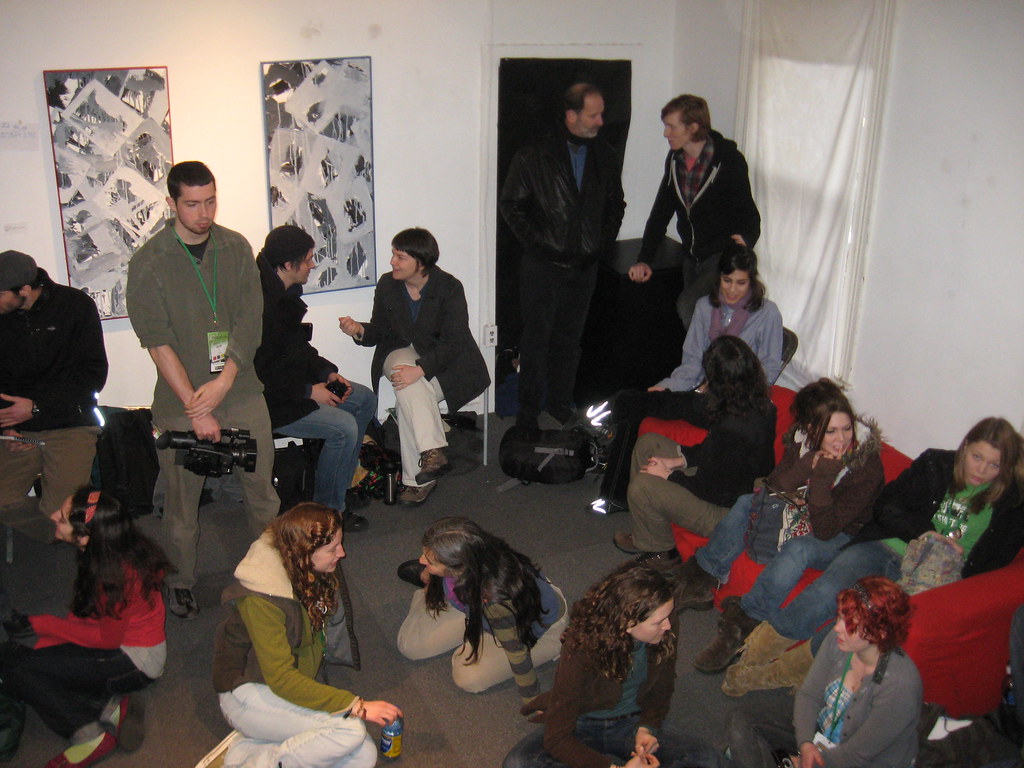
I am so thrilled about the “Pause,” a restorative and rigorous retreat we convened last week. I am deeply grateful for all who attended, supported, and donated to make this event possible. It was truly a special occasion, gathering some amazing climate activists who are approaching the crisis from a justice perspective, and working to build movements at the intersections of ecology and social justice. We were also joined by our amazing video team (justinfrancese.com) and kitchen magicians (delicata catering). The beautiful Bluewater Farm in Andover, NH (traditional Pennacook Territory) was generously donated for this event. Check out pics…

www.flickr.com

smartMeme’s Invoking the Pause: smartMeme conveing on climate and social justice photoset

The sessions involved narrative power analysis and discussions of the dominant frames on the climate crisis; climate justice principles; the UNFCCC negotiations in Copenhagen later this year; and creative ideas for how to spread memes for climate justice.

We also had a celebration on Tuesday evening, and were blessed with local special guests from the Winter Center for Indigenous Traditions (dedicated to environmental justice, Abinaki indigenous rights and cultural practices), and local CSA organic farmer Katherine Darling, of Two Mountain Farm.

Fireside chats and formal sessions included discussions of the upcoming G20 meeting in Pittsburg, stories from past UNFCCC talks in Bali and Poznan, reflections on race and racism in the environmental field, and visioning for how to build an inclusive movement that addresses the root causes of the climate crisis.

As I write this blog, I am recalling this experience and simultanously struck by the stakes. Listening to this mornings news from the G8 Summit in Italy, I hear the voice of Phil Radford, executive director of Greenpeace USA:

“It’s almost diagnosing your child with cancer but not taking the kid to the doctor. It just doesn’t seem like good leadership, and I think people expect better of President Obama and other world leaders.”

Then, the sobering words of Ken Lieberthal of the Brookings Institution (?):

“I think it’s going to be very, very hard to avoid a catastrophe, so I think anyone who looks very seriously at this issue has to say that the future looks very, very sobering.”

Indeed.

The Road to Copenhagen is hot, long, and treacherous. But we make the road by walking…

Below is an excerpt of a report-back on the retreat by some of the participants…

Here is a report-back from a strategy retreat convened by smartMeme that I attended last week (called “The Pause”) to discuss climate justice issues & messaging. There were about 15 or so folks in attendance, all invited by smartMeme or other attendees. The folks who came were connected with various orgs with a major focus on either climate justice or environmental justice: Environmental Justice Climate Change Initiative (EJCC), Indigenous Environmental Network, Action Mill, Avaaz.org Climate Action, Katrina to Copenhagen, Global Justice Ecology Project, Rainforest Action Network, The Ruckus Society, Movement Generation, DS4SI and Northeast Action.

The retreat intended to focus on how to do more effective framing and messaging around climate justice, following the smartMeme model of challenging underlying cultural assumptions (you can download their new manual for free at smartmeme.org). On the first day we heard some presentations about smartMeme’s messaging strategy and ‘narrative power analysis’ (see the manual for a more in-depth explanation of this), as well as some strategies that have been used by Action Mill and Design Studio for Social Intervention, a community organizing group in Boston. There were some brainstorming sessions to “get the creative juices flowing,” and some short presentations about Environmental Justice/Climate Justice principles, the COP-15 process, the Mobilization for Climate Justice and other organizing underway.

The second day the group wanted to get deeper into concerns of numerous people present on the watering down of the term “climate justice” and its conflation with climate action, which is not necessarily based in justice (carbon offsetting, for example)…

All in all, while the retreat was not exactly what I expected, it was the unexpected conversations that I found most valuable and thought-provoking. And the facilitators did an excellent job of being flexible and serving the many changing needs of the group. Oh, and I forgot to mention the food was AMAZING. Mainly, it was great just to connect with so many awesome folks, and be able to have some of the hard (but
so necessary) conversations around how to build a movement across boundaries of race, class, and culture. Only by hearing each other and working through this stuff will we ever stand a chance of building the sort of broad-based movement that actually has the power to bring about systemic changes…

Proselytizing at the Science Museum? NanoDays and the Techno-Fix Myth

Friday, April 10th, 2009

I always thought that science museums were supposed to be educational, but where is the line between educating, and promoting a risky new technology?

Welcome to NanoDays!

According to its organizers the Nanoscale Informal Science Education Network, NanoDays is “a nationwide celebration of nanoscale science and technology” that just last week happened at over 200 museums and other educational institutions around the United States. SmartMeme has tracked the issue of nanoscale technologies for several years and worked with a number of environmental and social justice groups to ignite popular debate about this rapidly growing industry. So I thought I’d do a little cultural reconnaissance and check out the now annual NanoDays at my local children’s science museum San Francisco’s famous Exploratorium.


Our kids are learning about nanotechnology but how much do the rest of us know? Most media coverage of emerging technology is either business press about investment possibilities or an uncritical, “gee-whiz isn’t this neat?” story. The political, social, ecological and ethical implications of powerful new technologies like nanotech are largely unaddressed in the mainstream media.

Nano: a Quick Primer

Nanoscale refers to the mysterious world of atoms and molecules that are smaller than 100 nanometers. A nanometer is 1 billionth of a meter (for reference sake a human hair is about 80,000 nanometer wide and the head of a pin is comparatively gigantic at 1 million nanometers across) so we’re talking about things that are almost unimaginably small.

However, nanoscale technology is not just about making things really small. Its more about creating a different paradigm where our reality of Newtonian mechanics is replaced with the unexpected dynamics of quantum mechanics. Thus, nanoscale materials are fundamentally different than the same materials in larger scales and have different properties such as different colors, conductivity, strength or magnetism.

This has made nanoscale materials very exciting to industrialists but it also means that nanomaterials present unique risks to human health and the environment. Since they are so small, the human (or animal) organism’s natural defenses are largely useless in preventing potential toxic nanoparticles from entering our bodies. The fact is that there is no significant testing, regulation or even labeling currently required of nanomaterials, even though they are in hundreds of everyday consumer products such as sunscreen, make up, clothing and computers. The Woodrow Wilson Center’s Nanotechnology Project has compiled a Consumer Product’s Inventory with over 800 consumer products containing nanoscale materials.
But beyond health and safety concerns, nanoscale technologies represent incredible new power to take apart and reconstruct nature at the molecular level. The critical questions are, “How will this power be used? By who? And to do what?”

The “Techno-Fix” Myth

Some of the world’s largest corporations (DuPont, Microsoft, major defense contractors, etc.), governments and militaries are already heavily investing in nanoscale technologies that have the potential to unleash massive changes in medicine, manufacturing, and energy production-as well as warfare, surveillance and social control. All of this is happening without any broader public discussion or democratic decision making.

Based on what I experienced at NanoDays, I don’t expect much critical discussion to emerge from the nation’s science museums. I picked up “Small Talk” a kids activity pamphlet created by PBS’s Dragonfly TV that promises “BIG nanofun.” It encourages you to make you’re own buckeyball (a well known nanoparticle) but fails to mention that studies have found them to cause brain damage to fish, kill water fleas and to be toxic to human liver cells.

I saw enthusiastic exhibits on how nanotechnology give us stain free pants and LED screens, but no mention of the extensive research into military applications. The most dramatic evangelism came at the special feature presentation on how nanotechnology and energy. According to NanoDays, it turns out that nanotechnology will provide the solution to all of our energy and global warming problems!

Does the hype sound familiar? Kind of like nuclear power or genetically engineered crops? To many people this is a familiar story. The common denominator is the larger TECHNO-FIX narrative that assumes that technological developments are inherently “neutral,” always beneficial and can magically solve our most pressing social and environmental problems. One of the most dangerous aspects of this pervasive cultural narrative is that is masks the reality that technological developments are shaped by social forces and are inevitably political. The direction of technological developments are not pre-ordained. Rather, they are shaped by the specific perspectives and agendas of those people and institutions driving them. We should always ask who is funding any new technology; Who will own and control it? Who will benefit from its use and who will lose? What unexpected (or under-publicized) consequences might it have?

Since profit-driven multinational corporations and the military are the main institutions driving technological development, from a social justice perspective, I believe its essential to look critically at new technologies.

The techno-fix narrative draws many of its operating assumptions from the ideology that humanity is separate from the natural world, and that we can and should dominate and manipulate nature to fufill human desires. This ideology is at odds with the wisdom of countless cultures, religious teachings (and increasingly, modern science) that point to the fundamental interconnectedness of all life. Likewise, its good to remember our humility when we’re assessing the degree to which modern science understands the incredible complexities of the life sustaining systems of our planet. After all, isn’t it blind faith in so-called “technological progress” and arrogant assumptions about humanity’s ability to remake the natural world that helped created the ecological crisis in the first place?

As Albert Einstein famously said, “We can’t solve problems by using the same kind of thinking we used when we created them.” This is not to say that technology may not offer some important solutions. Nanotechnology, for instance, could have useful applications in creating a new generation of solar panels, more efficient electrical transmission, and who knows what else. But we can’t let hype or hysteria rush us into ignoring either the short term risks or long term implications of nanoscale technologies. That is why many environmental and social justice organizations, as well as governments-and even some multinational corporations-are promoting the Preacautionary Principle as a framework for addressing the questions raised by new technologies. Put simply, precautionary approaches remind us that it’s much better to have the foresight to prevent a disaster than to try to clean it up after its too late.

Techno-Fix Memes = Double Danger in the Climate Crisis

Perhaps the biggest battleground for challenging the techno-fix narrative is the debate around how to solve global warming. The sweeping actions that are needed to transition our society off fossil fuels and re-stabilize the atmosphere pose a challenge to powerful, profitable interests like oil and coal. They are increasingly dangling the carrot of easy techno-fixes to distract and derail proposals that would actually challenge the status quo.

From the propaganda on how carbon capture and sequestration technology will make coal “clean,” to Agribiz corporations promoting so-called “biofuels” as a way to keep us in our cars. Obama’s science advisor John Holdren (pictured at the left) is talking about geoengineering the planet by shooting sulphate nanoparticles into the atmosphere in order to reflect some of the sun’s light. (Um, scary…!) See Corporate Watch’s new Techno-fixes report for a more thorough analysis of various proposed techo-fixes for the climate crisis.)

The stakes are high and our movements to stop global warming have to also innoculate the public against the techno-fix narrative. Sophisticated PR and big marketing budgets are already selling the stories of techno-fix that require little sacrifice or transition. These memes could co-opt the growing cultural momentum to address the climate crisis into dead ends and false solutions. Not only could we lose valuable time to address the crisis, but these technologies could backfire. In the sheeps clothing of stopping climate change, untested, powerful new technologies deployed on a wide scale could potentially create major new threats to our environment, human health and the democratic process.

We need better story-based strategies that can frame the debate and direct collective action towards addressing the root causes of our climate crisis: rampant consumerism, alienation from nature, fossil fuel addiction, a profit-driven globalized economy and the outdated story of unlimited economic growth.

Sure some technological advances may play a role in helping solve our problems. But only if they don’t distract us from the real work: shifting our culture, economy and political system from trying to dominate and re-engineer nature, to operating in balance with the planet’s natural systems.

Let’s try teaching that to our kids at the science museums.

Further Resources on Social, Ecological and Ethical Implications of Nanotechnology from some of the groups that smartMeme has worked with on the issue:

International Center for Technology Assessment’s NanoAction Project
International civil society technology watchdog The ETC Group
Friends of the Earth USA and Friends of the Earth Australia

Also check out a great overview article of different technology contraversies and battle grounds that ETC Group’s Jim Thomas wrote for the Ecologist magazine

Report-Back: Capitol Climate Action

Tuesday, March 17th, 2009

Two weeks ago I was in the streets with thousands of friends, old and new, for the historic Capitol Climate Action (Check out my pics on FLICKR!) SmartMeme endorsed this action, and I was excited to support the effort by helping to create messages for the action’s banners, training participants in nonviolent direct action , and being a “contingent coordinator” with the awesome Blue Team.
Honestly, I had a ball! The action was well organized, colorful, and upbeat despite the cold temperatures. My nonviolence training session was packed - with a dozen participants showing up 30 minutes early to ensure they got a spot, and a line going out the door when the room was full. 95% of that group were first timers to nonviolent protest, and they were fired up and ready to stop coal and solve global warming.

The action was endorsed by a large and diverse community of organizations, and attention was made to amplifying the voices of directly-impacted people. Leading the march were residents of Appalachian communities being blown-up by the Coal Industry; Indigenous delegations from Black Mesa and Michigan (where five new coal fired power plants are proposed), and leaders from Chicago’s Little Village Environmental Justice Organization, who are fighting for clean air against coal fired power plants. They were joined by celebrities and prominent environmental leaders like Bill McKibben and Wendell Berry, and the executive directors of the convening groups. The majority of participants were students (mostly white), many of them taking action in the streets for the first time.

Action Logic

The Capitol Coal Plant was a smart venue for this event. It comes with built in symbolism and implicit story-based strategy. The plant is powered by coal to warm and cool our nation’s Capitol building. The concept of the action was to draw attention to the fact that coal-fired power is fueling climate destabilization, and highlight the utterly destructive life cycle of coal, from mining to slurry to smog. It was also a way to point to the heavyweight influence that the coal industry has over all of Capitol Hill. Symbolically this was a perfect stage for our play.

But two unexpected things happened that took the story off the script.

1. Days before the protest, Speaker of the House Nancy Pelosi and Senate Leader Harry Reid released a letter asking the Capitol Architect to switch the Capitol Power Plant from coal to 100 percent natural gas by the end of 2009.

Organizers responded saying that this was a victory, showing the power of grassroots mobilization to get the attention of power holders. This hardly took the wind out of our sails, but did complicate the frame. The discussion emerged in my nonviolence training about whether this shift even was a victory: “Natural gas is also a fossil fuel.” “The problem is the whole coal/oil/fossil fuel paradigm.” “One symbolic concession is a dangerous victory to claim, given the stakes.”

So the question is, what would a real victory look like? What if we’d pressed Pelosi further, and said “If you want to make a statement, put solar panels on the Mall and windmills along the Potomac, and kick Coal Inc. out of Congress.” As the climate fight intensifies, we cannot settle for half-hearted victories or afford to celebrate false solutions. We’ve got to shift our thinking and get ahead of the curve with visionary, foreshadowing stories and strategies. Bolder demands can be made of the new political establishment, and now is the time to make them.

2. The police declined to arrest anyone.

Which, at the end of a long cold day was kind of a nice thing. But the Action Logic suffered from a framing around arrest as the “meta-verb” and the expectation. (A discussion of action logic (How the action tells a story and makes sense to an outside observer) and meta-verbs (the way the logic translates into the actions we’ll take: “rally, protest, shut-down, surround”) can be found in the article Story-based Strategies for Direct Action Design )

The calls to action were framed around a civil disobedience at the plant, which was bold, and wonderful. But it meant that the conversation of the day was about “getting arrested” and there was a sort of anti-climactic feel to the lack of arrest. The protests surrounded the plant and we held the space at every gate, so there was no traffic in or out. But there was no actual trespass on to the property, and therefore no good reason to arrest 2,000 peaceful people. Not arresting people actually served to diffuse the media-spectacle, and potentially, the impact of the action.

The lesson here is that it is essential to tactically prepare for mass-arrest (with trainings, legal teams, etc.) while strategically and rhetorically preparing for all outcomes, including no arrest.

Despite these twists in the plot, the organizers declared the action a success, saying:

“We look to our goals: 1) change the national conversation on climate, 2) push the new administration and congress for bolder policy, and 3) build the movement — all as successes – the impacts of which we will see unfold more and more.”

I would have to whole-heartedly agree with this assessment. The hopeful tenacity that I felt in the streets was truly moving. Memories of my flight over West Virginia last summer flashed through my mind as I marched side by side with urban students and residents from rural Appalachia. The images came back to me in their full horror: the bombed out landscape and unbelievable scale of destruction by so-called “mountaintop removal mining.” Tears came to my eyes as we chanted together in the shadow of the smokestack and the Capitol dome: “These dirty lies have got to stop / We’re here to save our mountain tops.”

Our friend Josh Kahn Russell did a great post on “getting real about what this action is, and what its’ not” discussing the context of movement building and community-based organizing, and it seems that this has sparked some thoughtful discussion about where to take this protest energy as the movement for climate justice moves forward.

Messaging

Working with friends at the Rainforest Action Network (and other communications team peeps) we helped to develop banner slogans:

and I had a blast riffing’ with RAN’s Levana Saxon and the “chants posse,” coming up with some fun songs like:

Whose gonna do it? We’re the ones! / Gonna get our energy from the sun

Coal Fired Power - Shut it Down! We want Climate Justice and We Want it Now

More great chants are posted HERE! Thanks Levana!

What’s Next?

The tone of the action was optimistic and joyful, but make no mistake - the stakes are high. In every conversation people said to me some version of “2009 is the critical year for the Climate, and the fight is about coal. If we don’t move now, there’s no turning back.”

They were referring of course to the threshold of carbon in the atmosphere that we must not cross, and of Obama’s plans to pass some sort of legislation on carbon emissions before the COP-10 Summit of the United Nations in Copenhagen. Having just spent a good deal of time researching and writing the Afterward to smartMeme’s new RE:imagining Change strategy manual regarding innovation in the face of the ecological crisis, I am particularly attuned to the urgency of wide-scale action. The Capital Climate Action renewed my faith, and strengthened my resolve to change the story for a just climate future.

For a rundown on upcoming events and opportunities, check out “Beyond the Capitol Climate Action” by Scott Parkin of RAN and Rising Tide North America,

and Act for Climate Justice, a site for US mobilizations around the COP-10 climate talks.

The Capitol Climate Action was called the “first national mobilization for climate justice.” This is an exciting frame for the kind of comprehensive, holistic politics that are needed to create a space for the many stories, histories, and perspectives on the root causes of climate change, and ways to solve it. Let’s hope this is the first of many, and that we can keep social justice at the center as we struggle to save our warming planet.

“Its even worse than we thought”

Wednesday, February 18th, 2009

But Climate Justice is Coming to the Capitol!

On February 16th the Intergovernmental Panel on Climate Change released their latest reports. They basically said, ‘Well, its even worse than we thought…’

“The world is warming far more quickly than scientists forecast just two years ago..[because of] the unexpectedly rapid increase in the burning of fossil fuels, especially coal, since 2000. “We are looking now at a future climate that’s beyond anything we’ve considered seriously in climate model simulations,’”
- The Financial Times, February 17th 2009

We know the climate is in crisis, and we know we must act. We know that the next 50 generations are counting on us. And we know that clean coal is an industry-crafted control meme - a myth we must dispel if we are to make any progress towards climate justice.

That’s why we invite you to join us on March 2, 2009 for the historic Mass Nonviolent Civil Disobedience at the coal-fired capitol power plant in Washington, DC.

On March 2, join smartMeme and thousands more in a multi-generational act of civil disobedience at the Capitol Power Plant - a plant that powers Congress with dirty energy and symbolizes a past that cannot be our future. Let’s use this action as a rallying cry for a clean energy economy that will protect the health of our families, our climate, and our future.climate justice now banner

This will be the largest nonviolent direct action to stop global warming ever. It will be a peaceful demonstration, carried out in a spirit of hope, in keeping with the spirit of this political moment. We will be there lookin’ fly in our dress clothes, and ask the same of you.

In our guts, we know the fight for climate justice is one of the greatest challenges of our time, and that is going to take tremendous courage and political risk. It’s time to take a stand on global warming. We can’t wait any longer for the changes we know we can, and must, make today.

With a new administration and a new Congress, we have a window of opportunity. But we have to open it - together.

See you in the streets!

P.S: Why are we inspired to be part of this action? Read our discussion of the ecological crisis in the “Afterword - A Call to Innovation,” which invites activists to reimagine our strategies in the face of a rapidly changing, warming world.

“There are moments in a nation’s-and a planet’s-history when it may be necessary for some to break the law in order to bear witness to an evil, bring it to wider attention, and push for its correction. We think such a time has arrived…The industry claim that there is something called “clean coal” is, put simply, a lie. But it’s a lie told with tens of millions of dollars, which we do not have. We have our bodies, and we are willing to use them to make our point.”

~ Bill McKibben & Wendell Berry’s invitation to the Capitol Climate Action