
Home   »  Blog

Blog

Archive for March, 2009

Exploring the Heroic Imagination

Monday, March 23rd, 2009

Organizers and movement builders have always helped ordinary people realize their own power-–both individually and collectively––and supported them in taking action to make their communities better. Although the lead-from-behind nature of organizing is at odds with the way our celebrity-obsessed culture has constructed heroism, social justice work is full of unsung, everyday heroes. Telling the stories of this type of heroism can not only inspire others to action but can also help redefine what it means to be a hero.

It was in this spirit that I had the pleasure of attending a fascinating and unique conference this past weekend at the Center for Advanced Studies in Behavorial Sciences in Palo Alto, California. The conference was convening by the newly formed Heroic Imagination Project and was bringing together experts in different fields to examine the issue of heroism and promoting moral courage.

It was a small but very eclectic gathering of social scientists (including one who had travelled all the way from Italy to attend), entrepreneurs, educators, media industry professionals (representing a gamut from start-ups to an editor from TIME magazine) and of course yours truly from the social justice sector. The common denominator among the participants was a willingness to see heroism as a meme in the culture which could be demystified and democratized to promote the concept of everyday heroes and broader action to promote the greater good. (“Sociocentric behavior” as I learned the psychologists like to call it).

The project is the brain child of Dr. Philip Zimbardo a Professor Emeritus of Psychology at Stanford University. Dr. Zimbardo is a world famous lecturer, best selling author of countless books and among the world’s most famous living social psychologists. His ground breaking work––including the controversial 1971 Stanford Prison Experiment––helped laid the foundations of the field. He was also an expert witness in the Abu Ghraib trials who challenged the U.S. government myth of “a few bad apples” and put the whole system on trial in his best selling book about the psychology of evil called The Lucifer Effect: How Good People Turn Evil.

At the core of Dr. Zimbardo’s work is an examination of how, when and why people stand up to illegitimate authority. The Heroic Imagination Project is taking the research on the psychology of evil and flipping it around to ask how can we teach our children and shift our culture to be more heroic about resisting immoral behavior. You can see his talk on the subject at the TED conference.

Dr. Zimbardo reached out to SmartMeme and asked us to come share our work around building broader social movements and discuss how taking action for social change is heroic. Although its a different starting point for discussing social justice work than we normally use it was an intriguing lens. One key concept that emerged from my presentation was that we need to shift the definition of heroism from the current focus on individual action to one of collective action. How can our communities be heroic? How can we shift our culture to embrace a heroism that has moved beyond its often militaristic origins to incorporate broader types of collective action? (I learned that in Germany the traditional word for “hero” was so connected to the Nazis that post-WW II the term is no longer used.) What would it take to make the idea of a “peace hero” as well known and applauded as a “war hero”?

These are big questions and ones that organizers and social justice advocates are addressing all the time. It’s exciting to know that smart people in other fields are tackling the issue as well because in a era of runaway crisis––from climate destabilization to the pathologies of the financial system–––we’re going to need all the heroes we can get. Stay tuned to see if the Heroic Imagination Project and collaborators can expand the definition of heroism and push the new meme into popular culture.

Professor Zimbardo speaking at an anti-war rally in 2003.

Report-Back: Capitol Climate Action

Tuesday, March 17th, 2009

Two weeks ago I was in the streets with thousands of friends, old and new, for the historic Capitol Climate Action (Check out my pics on FLICKR!) SmartMeme endorsed this action, and I was excited to support the effort by helping to create messages for the action’s banners, training participants in nonviolent direct action , and being a “contingent coordinator” with the awesome Blue Team.
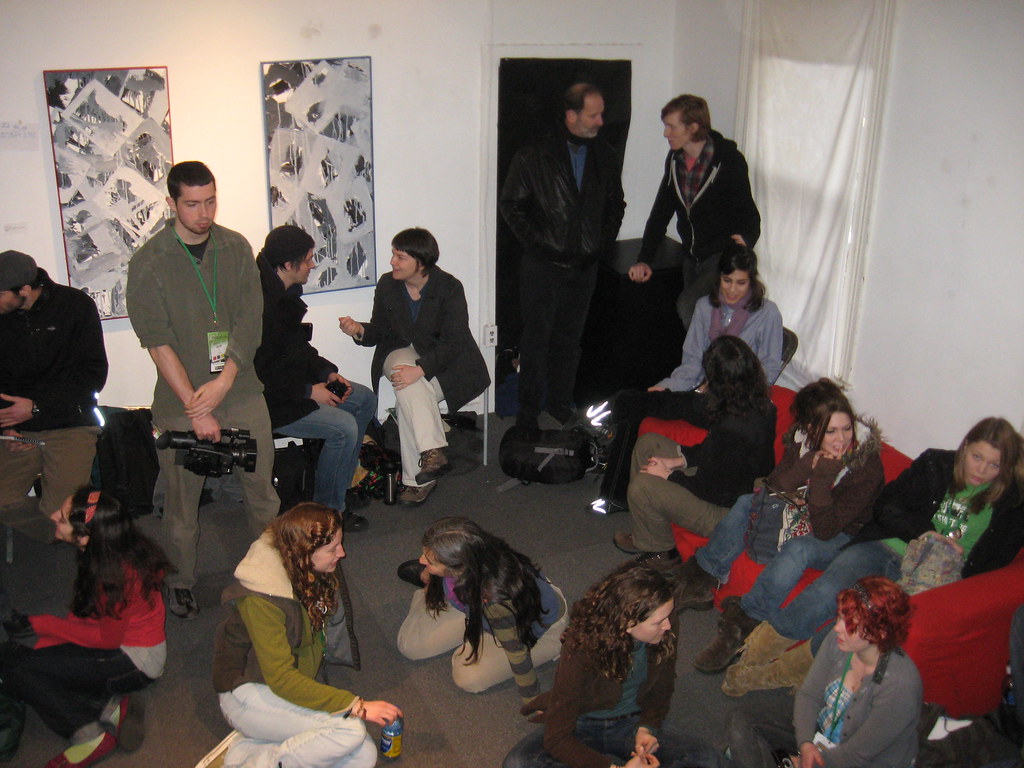
Honestly, I had a ball! The action was well organized, colorful, and upbeat despite the cold temperatures. My nonviolence training session was packed - with a dozen participants showing up 30 minutes early to ensure they got a spot, and a line going out the door when the room was full. 95% of that group were first timers to nonviolent protest, and they were fired up and ready to stop coal and solve global warming.

The action was endorsed by a large and diverse community of organizations, and attention was made to amplifying the voices of directly-impacted people. Leading the march were residents of Appalachian communities being blown-up by the Coal Industry; Indigenous delegations from Black Mesa and Michigan (where five new coal fired power plants are proposed), and leaders from Chicago’s Little Village Environmental Justice Organization, who are fighting for clean air against coal fired power plants. They were joined by celebrities and prominent environmental leaders like Bill McKibben and Wendell Berry, and the executive directors of the convening groups. The majority of participants were students (mostly white), many of them taking action in the streets for the first time.

Action Logic

The Capitol Coal Plant was a smart venue for this event. It comes with built in symbolism and implicit story-based strategy. The plant is powered by coal to warm and cool our nation’s Capitol building. The concept of the action was to draw attention to the fact that coal-fired power is fueling climate destabilization, and highlight the utterly destructive life cycle of coal, from mining to slurry to smog. It was also a way to point to the heavyweight influence that the coal industry has over all of Capitol Hill. Symbolically this was a perfect stage for our play.

But two unexpected things happened that took the story off the script.

1. Days before the protest, Speaker of the House Nancy Pelosi and Senate Leader Harry Reid released a letter asking the Capitol Architect to switch the Capitol Power Plant from coal to 100 percent natural gas by the end of 2009.

Organizers responded saying that this was a victory, showing the power of grassroots mobilization to get the attention of power holders. This hardly took the wind out of our sails, but did complicate the frame. The discussion emerged in my nonviolence training about whether this shift even was a victory: “Natural gas is also a fossil fuel.” “The problem is the whole coal/oil/fossil fuel paradigm.” “One symbolic concession is a dangerous victory to claim, given the stakes.”

So the question is, what would a real victory look like? What if we’d pressed Pelosi further, and said “If you want to make a statement, put solar panels on the Mall and windmills along the Potomac, and kick Coal Inc. out of Congress.” As the climate fight intensifies, we cannot settle for half-hearted victories or afford to celebrate false solutions. We’ve got to shift our thinking and get ahead of the curve with visionary, foreshadowing stories and strategies. Bolder demands can be made of the new political establishment, and now is the time to make them.

2. The police declined to arrest anyone.

Which, at the end of a long cold day was kind of a nice thing. But the Action Logic suffered from a framing around arrest as the “meta-verb” and the expectation. (A discussion of action logic (How the action tells a story and makes sense to an outside observer) and meta-verbs (the way the logic translates into the actions we’ll take: “rally, protest, shut-down, surround”) can be found in the article Story-based Strategies for Direct Action Design )

The calls to action were framed around a civil disobedience at the plant, which was bold, and wonderful. But it meant that the conversation of the day was about “getting arrested” and there was a sort of anti-climactic feel to the lack of arrest. The protests surrounded the plant and we held the space at every gate, so there was no traffic in or out. But there was no actual trespass on to the property, and therefore no good reason to arrest 2,000 peaceful people. Not arresting people actually served to diffuse the media-spectacle, and potentially, the impact of the action.

The lesson here is that it is essential to tactically prepare for mass-arrest (with trainings, legal teams, etc.) while strategically and rhetorically preparing for all outcomes, including no arrest.

Despite these twists in the plot, the organizers declared the action a success, saying:

“We look to our goals: 1) change the national conversation on climate, 2) push the new administration and congress for bolder policy, and 3) build the movement — all as successes – the impacts of which we will see unfold more and more.”

I would have to whole-heartedly agree with this assessment. The hopeful tenacity that I felt in the streets was truly moving. Memories of my flight over West Virginia last summer flashed through my mind as I marched side by side with urban students and residents from rural Appalachia. The images came back to me in their full horror: the bombed out landscape and unbelievable scale of destruction by so-called “mountaintop removal mining.” Tears came to my eyes as we chanted together in the shadow of the smokestack and the Capitol dome: “These dirty lies have got to stop / We’re here to save our mountain tops.”

Our friend Josh Kahn Russell did a great post on “getting real about what this action is, and what its’ not” discussing the context of movement building and community-based organizing, and it seems that this has sparked some thoughtful discussion about where to take this protest energy as the movement for climate justice moves forward.

Messaging

Working with friends at the Rainforest Action Network (and other communications team peeps) we helped to develop banner slogans:

and I had a blast riffing’ with RAN’s Levana Saxon and the “chants posse,” coming up with some fun songs like:

Whose gonna do it? We’re the ones! / Gonna get our energy from the sun

Coal Fired Power - Shut it Down! We want Climate Justice and We Want it Now

More great chants are posted HERE! Thanks Levana!

What’s Next?

The tone of the action was optimistic and joyful, but make no mistake - the stakes are high. In every conversation people said to me some version of “2009 is the critical year for the Climate, and the fight is about coal. If we don’t move now, there’s no turning back.”

They were referring of course to the threshold of carbon in the atmosphere that we must not cross, and of Obama’s plans to pass some sort of legislation on carbon emissions before the COP-10 Summit of the United Nations in Copenhagen. Having just spent a good deal of time researching and writing the Afterward to smartMeme’s new RE:imagining Change strategy manual regarding innovation in the face of the ecological crisis, I am particularly attuned to the urgency of wide-scale action. The Capital Climate Action renewed my faith, and strengthened my resolve to change the story for a just climate future.

For a rundown on upcoming events and opportunities, check out “Beyond the Capitol Climate Action” by Scott Parkin of RAN and Rising Tide North America,

and Act for Climate Justice, a site for US mobilizations around the COP-10 climate talks.

The Capitol Climate Action was called the “first national mobilization for climate justice.” This is an exciting frame for the kind of comprehensive, holistic politics that are needed to create a space for the many stories, histories, and perspectives on the root causes of climate change, and ways to solve it. Let’s hope this is the first of many, and that we can keep social justice at the center as we struggle to save our warming planet.